
.webp)
World Cogeneration Day takes place on 4th September. It honours Combined Heat and Power (CHP) technology and the people who design, operate, and maintain gas engine CHP systems that provide reliable, efficient, and resilient energy worldwide.
For energy professionals, facility operators, engineers, and organisations in sectors such as manufacturing, healthcare, universities, data centres, and other critical infrastructure, it offers a timely opportunity to focus on a proven energy solution that can help meet rising electricity demand, improve efficiency, control costs, enhance resilience, and support decarbonisation objectives.
The 2026 theme, "Speed to Power", highlights the growing demand for energy solutions that are fast, reliable, affordable, secure, and sustainable, especially amid ongoing delays in electrical grid connections.
This article explains World Cogeneration Day, how CHP works and where it adds value, how the 2026 theme aligns with current operational pressures, and what to consider when investing in CHP, including real-world examples and tools for estimating potential savings. It will also preview the key practical steps and essential considerations for evaluating and implementing CHP, helping you identify how to take action and move forward with on-site energy solutions.
World Cogeneration Day takes place every year on 4th September, a date chosen to mark the opening of Thomas Edison's Pearl Street Station in New York in 1882, widely regarded as the launch of the world's first commercial cogeneration plant. Since then, cogeneration technology has been in use for more than 140 years. The day honours CHP's role in improving energy efficiency, reducing emissions, increasing resilience, and supporting sustainable economic growth.
Today, CHP plants operate across a diverse range of sectors, including:
Because it produces both heat and electricity, CHP can help businesses, like yours, to reduce energy waste, improve operational efficiency, and strengthen energy security.
Combined Heat and Power, also referred to as cogeneration, involves generating electricity and useful thermal energy at the same time from one fuel source.
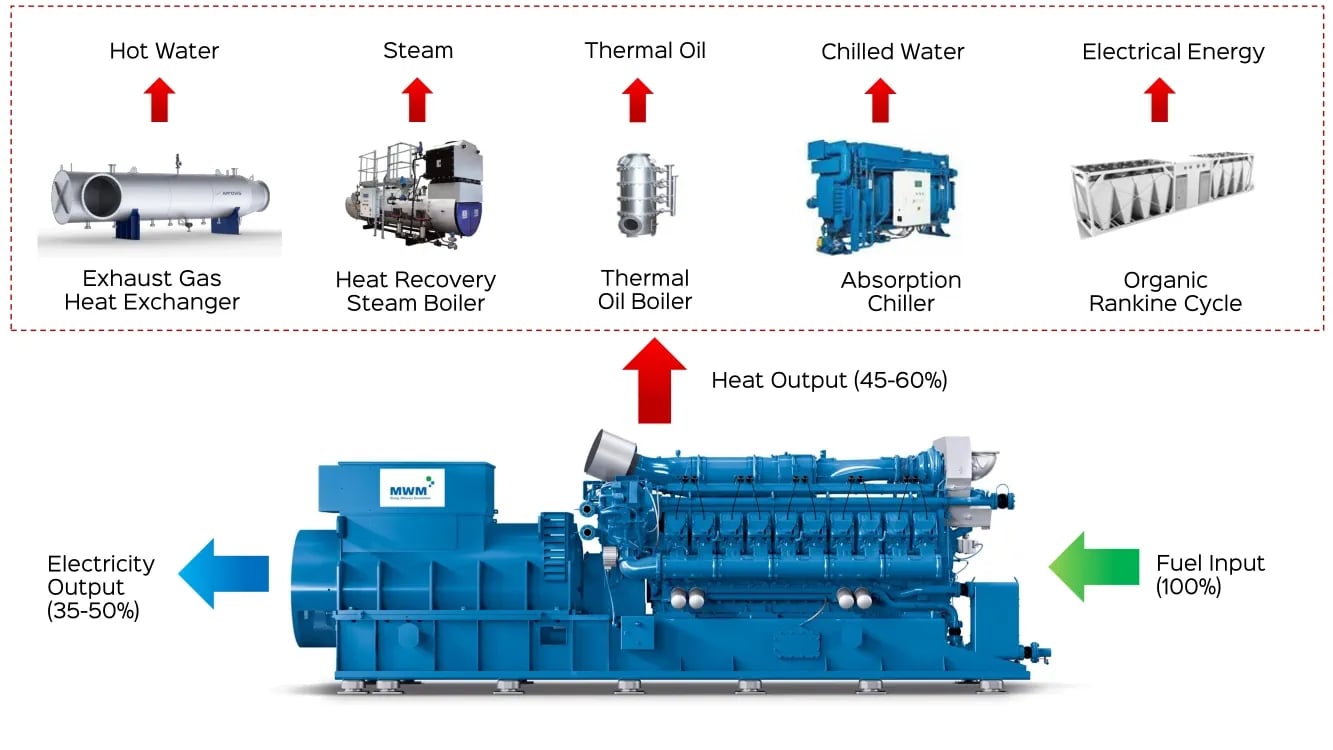
Unlike conventional centralised power generation, where significant amounts of heat are lost during electricity production, CHP captures this thermal energy and puts it to productive use, such as:
Compared to purchasing electricity from the grid and producing heat separately with boilers, this integrated method can greatly improve overall fuel use.
In today's energy market, "speed to power" has become a critical commercial advantage. With grid connection offers increasingly stretching several years due to transmission constraints, substation capacity shortages, and lengthy reinforcement works, Combined Heat and Power (CHP) offers a practical route for businesses to secure power much faster by generating electricity on-site. Distributed generation and microgrids are increasingly being deployed ahead of, or partly independent of, the grid to overcome long utility interconnection delays.
1. Immediate On-Site Generation
Rather than waiting for a utility network upgrade, a CHP plant generates electricity where it is consumed. For many industrial, healthcare, pharmaceutical, commercial, and data centre applications, this enables organisations to:
2. Modular and Scalable Deployment
Modern gas engine CHP systems are modular, meaning capacity can be installed in phases:
This flexibility is especially valuable for businesses that need power for production expansion, electrification projects, AI infrastructure, or new manufacturing facilities.
3. Enables Growth Despite Grid Constraints
Grid delays are no longer just an energy issue; they're a business constraint. For industrial manufacturers and critical infrastructure, the inability to secure additional electrical capacity can delay revenue generation, expansion projects, and investment decisions. CHP allows organisations to pursue growth plans by generating a significant proportion of their electrical demand while also producing useful heat.
Improved Efficiency - Because CHP systems make good use of recovered heat, they can achieve overall efficiencies that are higher than those of conventional power generation, typically achieving over 90%.
Lower Energy Costs - Achieve annual savings by up to 30%, reducing electricity imports and improving fuel utilisation. Asset payback can vary from 2 - 3 years depending on power costs, engine run time, and availability.
Enhanced Energy Security - If your CHP plant is configured for Island Mode Operation, generating power on-site reduces exposure to external grid disruptions and power-quality issues. It also helps safeguard businesses if the external supply is disrupted.
Reduced Carbon Emissions - Reduce greenhouse gas emissions by using renewable fuel inputs more efficiently; lower emissions benefit sustainability objectives.
Long-Term Asset Value - As long as your CHP plant is supported by professional maintenance and asset-care regimes, CHP systems offer reliable, proven technology with a long operational lifetime up to 15 years.
While CHP brings many benefits, you need to plan carefully to use it well. Be aware of common implementation challenges, such as navigating regulatory requirements, integrating with existing systems, and managing the upfront financial investment. Recognising these challenges helps set realistic expectations and ensures that organisations are prepared to overcome real-world complexities when considering CHP projects.
You should consider:
Carry out a feasibility study to find out whether CHP is suitable for your facility. A typical CHP feasibility study will include several key steps, such as:
Load analysis: Assessing your facility’s electricity and heat demand profiles to identify potential for CHP integration.
Site assessment: Reviewing available space, existing infrastructure, and operating conditions to evaluate technical compatibility.
Fuel options: Examining fuel availability and costs to determine the most suitable energy sources.
Financial modelling: Estimating project costs, including capital investment, operational savings, maintenance, and potential incentives.
Emissions and regulatory review: Analysing environmental impacts and compliance with local regulations.
Risk assessment: Identifying and planning for any possible technical or operational challenges.
These steps help ensure an informed investment decision and greater chances of successful CHP implementation.
Edina's free online CHP calculator can be used to assess the potential value of CHP. By providing a few details, the calculator allows you to estimate annual energy cost savings. It is an excellent starting point if you are considering on-site power generation.
In both the UK and Ireland, Edina CHP systems are helping organisations improve resilience, control costs, and increase sustainability.
Sector: Waste Management
Location: UK
Holme Bioenergy case study
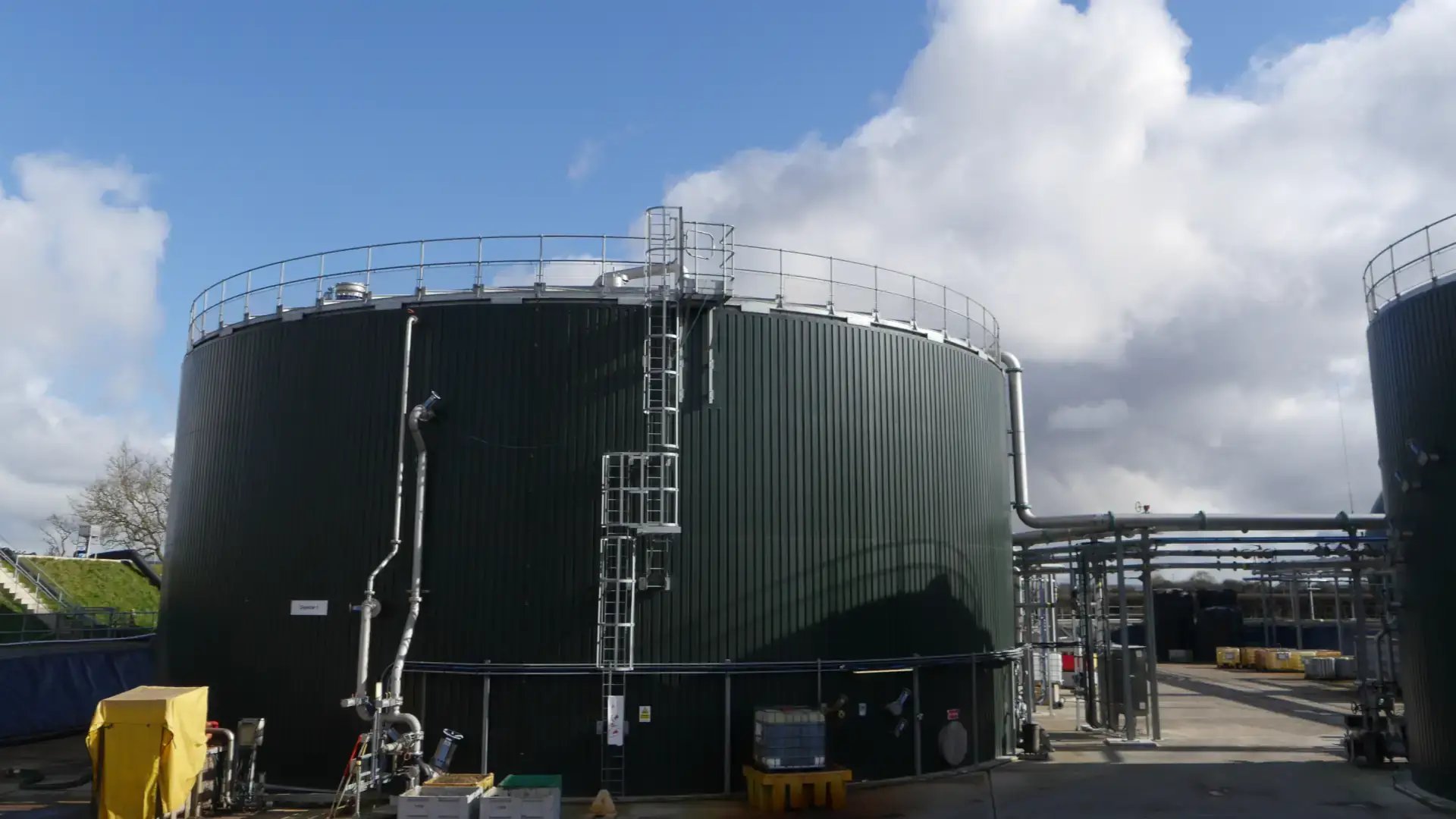
The Holme Bioenergy hybrid project is an innovative example of modern energy integration, combining Combined Heat and Power (CHP) with Battery Energy Storage Systems (BESS) and standby diesel generation. This project demonstrates how multiple technologies can be coordinated to optimise energy efficiency, resilience, and sustainability. In practical terms, a central control system is used to monitor real-time energy demand, electricity pricing, and the operational status of each asset.
The CHP system provides continuous on-site generation of heat and electricity to cover the facility’s base load needs. The BESS stores surplus energy generated by CHP, and then discharges this electricity during periods of high demand or peak pricing, helping to balance loads and reduce reliance on grid imports. Standby diesel generation automatically comes online in a backup role only if there is a major outage, system maintenance, or extremely high demand that cannot be met by CHP and BESS. The coordination of these assets is managed through operational sequencing and smart controls, ensuring that the most efficient and sustainable sources are always used first and backup generation is reserved for emergencies. By blending renewable and conventional technologies with careful integration and control, the Holme Bioenergy project highlights a robust approach to meeting energy needs, supporting decarbonisation, and enhancing energy security within a single site.
Sector: Education
Location: Ireland
QUB case study

The CHP installation at Queen's University Belfast achieves an overall system efficiency over 86% and enables the university to secure annual savings and reduced emissions.
Sector: Education
Location: UK
University of York case study
.jpeg?width=1920&height=1080&name=Edina%202.3MWe%20CHP%20at%20the%20University%20of%20York-1080p-thumb-1(1).jpeg)
Edina's third CHP plant for the University of York brings the total on-site generation capacity to 5.4MWe and helps the university achieve its ongoing energy efficiency and resilience aims, and campus expansion.
Sector: Pharmaceutical
Location: Ireland
Bausch + Lomb case study
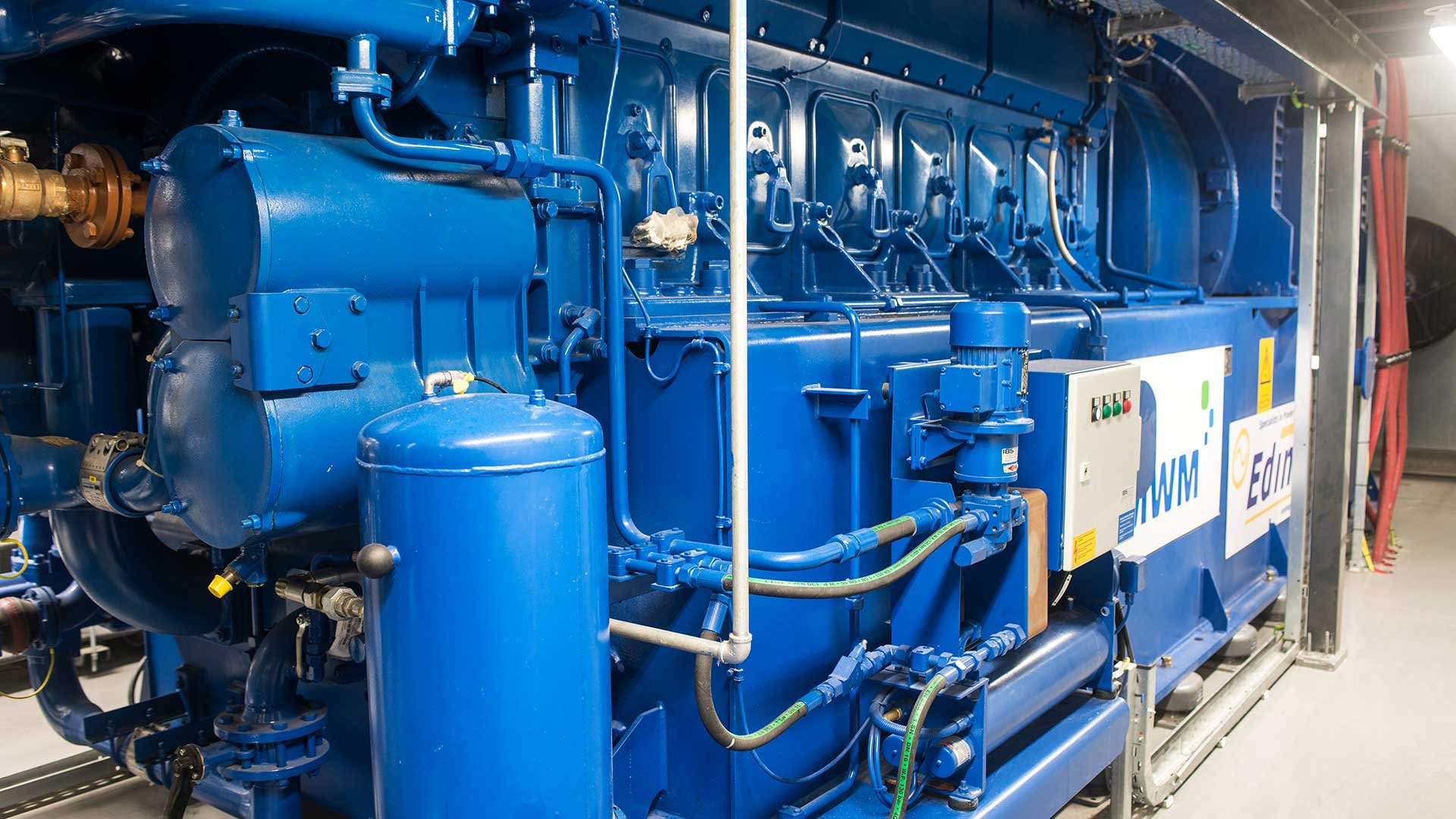
The CHP solution helps reduce operational energy costs while improving sustainability performance for Bausch + Lomb. The success of the project has led to an additional CHP plant supplied, installed, and maintained by Edina.
Healthcare organisations use CHP to guarantee a continuous supply of power, supporting health by enabling critical care facilities to run smoothly while reducing operating costs and contributing to carbon reduction programmes.
CHP supplies reliable heat and power on-site for energy-intensive manufacturing processes such as dairy processing and food production.
CHP plays a significant role in the waste and water treatment industry by providing on-site generation of electricity and heat, which can be used for process heating, maintaining optimal temperatures in digesters, and drying sludge.
CHP systems in this sector often run on sewage gas and biogas produced as a byproduct of anaerobic digestion, turning waste into energy and reducing operational costs and carbon emissions. For example, typical CHP installations in waste and water treatment facilities can achieve overall system efficiencies of 70 to 80 percent, compared to around 50 percent for separate heat and power generation.
These sites often report reductions in carbon emissions of up to 30 percent and energy cost savings in the range of 15 to 20 percent annually. This improves the efficiency and sustainability of treatment plants, enhances energy resilience, helps facilities operate independently from the grid and meet regulatory requirements for environmental performance, and supports circular economy principles within the industry.
If you'd like to learn more about how CHP can support your organisation's energy strategy, explore the following resources:

%20(1)%20(1).webp)

If you are looking to take control of your energy needs and produce power close to the point of use, we would love to hear about your project requirements and help power your future. If you would like to discuss your project, please contact us.