

chp-background-4_1920x1080

Combined Heat and Power (CHP) / Cogeneration

An Introduction: Your Complete Guide to Combined Heat and Power (CHP)

If your organisation has simultaneous demands for electricity and heat, Combined Heat and Power (CHP), also known as cogeneration, could help you reduce energy costs, improve sustainability, energy efficiency, and energy resilience. CHP is a highly efficient technology that generates electricity and useful heat from a single fuel source, capturing energy that is wasted in conventional power generation.

As energy prices continue to rise and sustainability targets become more demanding, CHP offers you a practical way to generate power and heat on-site more efficiently. It is particularly well suited to manufacturing facilities, commercial buildings, universities, agricultural operations, and critical infrastructure where there is a continuous need for both electricity and thermal energy.

This guide is designed to help you determine whether CHP is the right solution for your site. It explains how CHP systems work, the available technologies and fuel options, and how recovered heat can be used to maximise efficiency and return on investment. It also covers key considerations to evaluate, including system optimisation, financing, carbon taxation, asset management, long-term operational performance, and supplier selection.

In addition to conventional CHP systems, this guide explores advanced energy solutions such as Trigeneration, also known as Combined Cooling, Heat and Power (CCHP), which uses recovered heat to produce chilled water for cooling applications. It also examines Quadgeneration, which combines electricity, heating, cooling, and hot water production while recovering carbon dioxide from engine exhaust for use in selected industrial and horticultural processes.

You will also learn about both established and emerging fuel options, including natural gas, biogas, biomethane, and hydrogen-ready technologies. By understanding the technical, operational, environmental, and financial aspects of CHP, you will be better equipped to assess its suitability for your site and to develop a successful strategy to improve energy efficiency, decarbonisation, and energy resilience.

Let's dive in and start with the basics.

What is CHP / Cogeneration?

Combined Heat and Power (CHP), or Cogeneration (Cogen), is a well-established technology that simultaneously generates electricity and useful heat from a single fuel input. Unlike a traditional power station, where much of the heat produced is lost to the atmosphere, CHP captures and uses that heat to improve overall efficiency.

Cogeneration can save up to 30% on primary energy costs compared with separately purchasing electricity from the grid and gas for use in on-site boilers.

CHP has been used for many years across the globe in various industries and forms, with CHP technologies including steam boilers and steam turbines, gas turbines, reciprocating engines, and heat recovery systems, using fuels such as natural gas and biomass. The available fuel source, market sector, and scale generally determine the CHP arrangements selected.

In the UK, following the privatisation of British Gas in 1986 and the dash for gas in the 1990s, CHP in industry grew rapidly with the installation of gas turbines and steam boiler plants, and within the commercial sector and hospitals with the installation of gas engine plants. Today, due to reduced plant size and the need for greater operational flexibility, gas engine CHP has become the technology of choice.

With the drive towards a zero-carbon, sustainable economy, all the major manufacturers have biogas and biomethane green-gas engine variants. They are future-proofing their technology to use hydrogen (mixed or pure).

CHP is a proven, highly efficient technology and can deliver generation efficiencies of up to 95% utilising low-carbon natural gas as a fuel source. As gas grids become greener, the carbon signature of CHP will decrease. However, CHP can use zero-carbon fuels directly to achieve a zero or negative carbon position.

How Does CHP / Cogeneration Work?

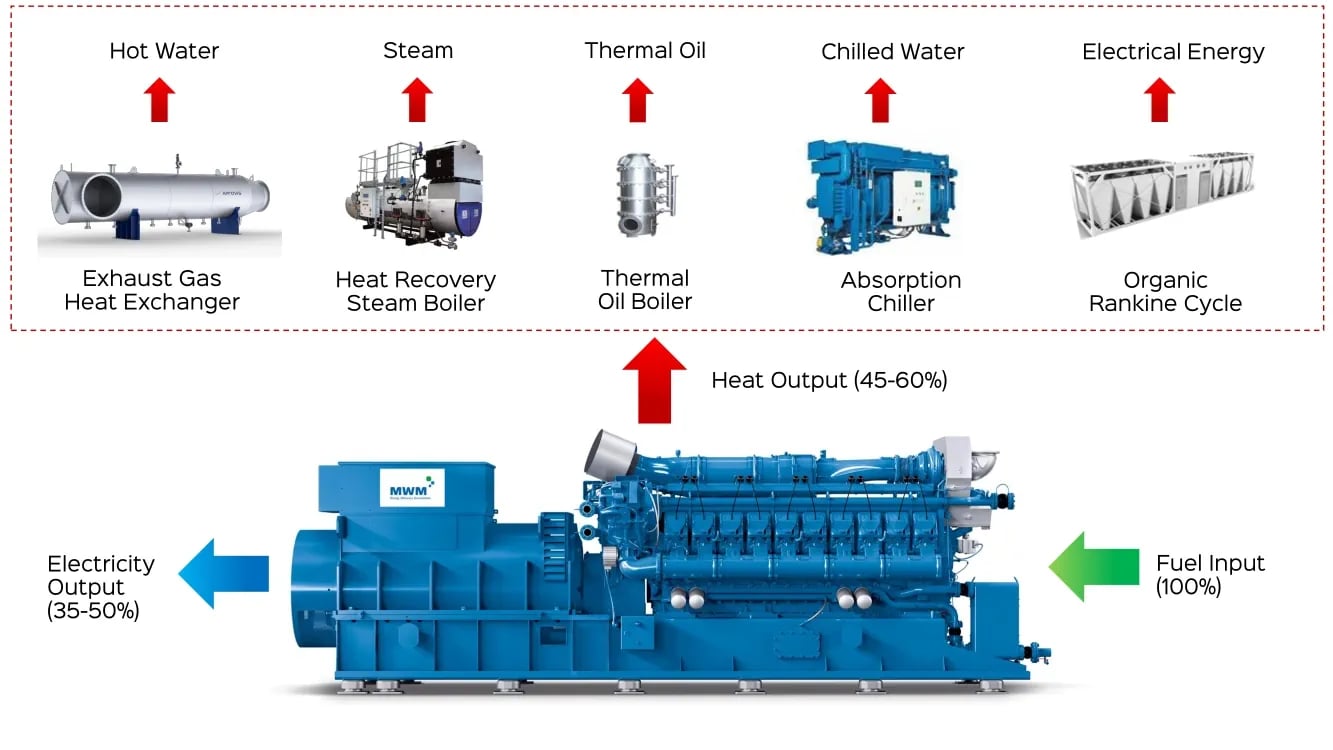
A fuel source (fossil or renewable) is combusted, and the energy produced drives a prime mover (reciprocating engine or gas turbine) that produces mechanical power and heat. The mechanical power is converted into electricity via an alternator. CHP systems generate electricity and heat simultaneously at the point of use, with the heat becoming usable to meet the site's requirements as illustrated below:
CHP Schematic-1

For some applications, a CHP system can achieve energy utilisation of up to 95%, supplying both electricity and heat more efficiently; typically, they meet between 70-80%, which is a significant improvement over importing grid electricity and conventional heat production. Improvements in energy production efficiency lower production costs, and when renewable fuels are used, they produce a lower carbon signature and lower carbon dioxide emissions per unit of energy produced.

Further power efficiencies are achieved because the cogenerated electricity and heat are produced and consumed on-site, avoiding the grid transmission losses of around 7.5% that occur in transporting electricity from remote generators to consumers.

Depending on a site-specific requirement, CHP can deliver improvements in energy efficiency, reductions in energy costs, and an improvement in the site's carbon signature. Cogeneration can save up to 30% on energy costs and offer a return on investment between 2 and 3 years. Depending on the fuel sources used (e.g., biogas, hydrogen), CHP can deliver a carbon-neutral or negative position.

Cooling Demand

Where sites have little demand for heat but require cooling for process, users can introduce absorption cooling into their CHP plant, which can operate at temperatures as low as -5 degree Celsius, redirecting recovered energy to cooling rather than rejecting heat that is not otherwise needed. This is called Combined Cooling, Heat, and Power (CCHP), or Trigeneration, which can deliver cooling for air conditioning and refrigeration.

Recovering CO2

Where an organisation requires CO2 in its processes (glasshouse growers, carbonated drinks industry, food processing industry, brewing industry), the production of CO2 from the combustion of carbon-based fuels can be an economical option.

Quadgeneration refers to an advanced form of CHP that integrates additional equipment to process exhaust gases according to specific user needs. For example, in agricultural applications such as glasshouse growing, this may involve simply removing contaminants and cooling the exhaust gases. In contrast, industries like food and beverage manufacturing require more complex processing plants to produce ultra-pure CO2 (up to 99.99%) for use in their operations.

Benefits of CHP / Cogeneration

If your organisation utilises power, heat, steam, cooling, and CO2 in your operations and processes, then CHP, Trigeneration, or Quadgeneration should be considered part of an energy strategy, as it can lower operating costs and reduce the carbon footprint of energy-intensive operations. It doesn’t fit every organisation, but where it does, CHP can deliver substantial benefits such as:

  1. Reduce or manage energy costs, offering long term savings
  2. Improvement of carbon footprint, helping reduce carbon emissions by up to 30%. 
  3. Flexibility in operation helping to manage energy demand and supply
  4. Improvement in energy resilience
  5. Future proofing your site from uncontrollable external energy factors
  6. Cogeneration of heat and electricity from a single fuel input
  7. Highly energy efficient
  8. Co-locate additional technologies such as solar PV, battery energy storage, and/or standby power generation as part of a hybrid power solution
  9. Address grid electricity supply constraints impacting business growth and manufacturing expansion

The above are just some of the many benefits of CHP compared to traditional means of separately generating power and heat, offering efficiency gains and environmental benefits.

When to Consider CHP / Cogeneration?

Combined Heat and Power (CHP) should be considered:

  1. If your existing energy plant is of an age where you are considering replacement equipment
  2. If your site is expanding and you require additional power and heat capacity

A gas engine CHP system has a power-to-heat ratio of 1:1-1.2, which means for every 1,000kW of electrical generation, 1,000-1,200kW of heat will be available.

Businesses that have operational sites with a simultaneous requirement for power and heat or cooling (i.e. heat ratio of 1: 0.5 ->1.2) for a long period over the year (6,000 – 8,000 hours annual operation), including large manufacturing facilities that are often ideal candidates due to their high energy demands and specific energy needs, are likely to benefit from the installation of CHP.

CHP plants operating at 8,000 hours or greater with power-to-heat utilisation of 1:1.2 or greater will deliver the best savings and the lowest carbon signature.

What to Consider When Evaluating CHP?

When evaluating CHP for your site, it is important to answer the following frequently asked questions:

Q1. What is your current energy usage and predicted future energy usage?

CHP systems deliver the best and most secure financial returns when available energy production is fully utilised.

Q2. What is your current energy pricing and predicted future energy pricing?

The greater the spread between the price of imported electricity and gas (known as the Spark Spread) will deliver the greatest financial benefit. A positive Spark Spread of '3' or above usually indicates that the CHP project will be financially viable.

Q3. What is the current cost of operation vs cost of operation with CHP?

Only the direct cost of CHP should be considered. In some cases, the inclusion of CHP can offset existing costs (for example, the removal of boilers, chillers, etc.), which need to be factored into your evaluations.

Q4. What are your investment requirements and additional investment for CHP?

CHP is one of the few technologies that can provide a return on investment. Low-interest loans may also be available to support CHP adoption. Financing CHP should also account for installation, fuel, and maintenance obligations over the asset's life. When evaluating the economic performance of the CHP, it should include only the plant directly associated with the CHP installation, not plants that are being upgraded or are required to provide security of service (e.g., standby plant, boilers, chillers, etc.).

Q5. What is your site's carbon signature pre and post CHP?

Businesses are required to operate sustainably. As such, CHP can help achieve your goals when correctly selected and delivered, including reducing greenhouse gas emissions when properly assessed.

Q6. Will the inclusion of CHP place the organisation into other areas of tax (for example the UK Emissions Trading Scheme (UKETS), Carbon Price Support (CPS))?

Any additional administration and cost burdens must be factored into financial modelling. Market pricing, Government initiatives, and taxation must be considered in long-term investments; such schemes are part of the wider policy and incentive landscape, but they are generally complex and, in some cases, work against each other. They can also set thresholds where schemes are optimised against financial performance rather than optimal environmental performance. Regulatory and interconnection hurdles can also complicate implementation, and the CHP Quality Assurance Scheme, introduced in 1996, reflects the long-standing compliance and incentive framework around these projects.

Carbon Tax

Climate Change Levy (CCL)

The Climate Change Levy (CCL) is an environmental tax charged on the energy that businesses use. It’s designed to encourage businesses to be more energy-efficient in their operations and to help reduce their overall emissions.  The CCL applies to businesses in the industrial, public services, commercial and agricultural sectors, and is charged on ‘taxable commodities’ for heating, lighting, and power purposes. CCL is paid at either the main rate or the Carbon Price Support (CPS) rate, with the differences detailed below.

Climate Change Levy Main Rates

Any business in the industrial, public services, commercial and agricultural sectors will be charged CCL at the main rate on electricity, gas, and solid fuel use (e.g., coal, coke, lignite or petroleum coke). The CCL main rates are listed on your business gas or electricity bill. Businesses exempt from paying the main CCL rates include charities engaged in non-commercial activities and businesses that consume energy below the de minimis limit.

Carbon Price Support Rates

If you own generating stations or operate Cogeneration plants greater than 2MW electrical generation, then you will be required to pay the Carbon Price Support (CPS) rate. The levy rate varies for each commodity: kilowatt-hours for gas and electricity, and kilograms for all other taxable commodities.

Additional information can be found by visiting the UK government resources below:

If you are the operator of a CHP plant with a generating capacity of 2MW or below, you are considered to be a small CHP plant and don’t need to register or account for the CPS rates of CCL, as there’s no deemed supply when a quantity of CPS rate commodity is delivered to the site of the CHP plant.

The generating capacity is specific to each CHP scheme registered under the Combined Heat and Power Quality Assurance (CHPQA) Programme. Therefore, when you calculate the capacity for your CHP station, you should not take into account any other stations you operate or that are operated by any person connected with you, apart from those that are covered by the same CHP scheme.

Carbon Price Support Rate Commodities used in a CHP Plant

CHPs registered under the Combined Heat and Power Quality Assurance (CHPQA) scheme with a generating capacity of 2MW or above that use CPS rate commodities as input fuels are liable to account for the CPS rates of CCL on the proportion of a quantity of a commodity that is the subject of a deemed supply. CPS rate commodities don’t form part of the deemed supply when intended for use in producing:

  • Heat outputs, which can include heat, steam, air, and water that have been heated or cooled, are useful thermal energy.
  • Electrical or mechanical power (used for driving fans or pumps, for example).
  • Qualifying electricity where the CPS rate commodities are brought onto, or arrive at, the station site on or after 1 April 2015.

The proportion of the commodity that is the subject of a deemed supply is initially provisional. This is because the status is based on the current CHPQA certificate. This CHPQA certificate records the actual performance of the CHP plant for the previous calendar year. Once the CHPQA certificate for the annual operation covering the CCL return period is received, you must review the status of commodities in that return period and adjust the declared liability accordingly.

Climate Change Levy Exemptions

The UK government provides support for CHP, as it is viewed as an energy-efficient solution for combined production that can deliver significant efficiency benefits over conventional sources of supply.

CHP plants must achieve “Good Quality CHP” status under the Combined Heat and Power Quality Assurance Scheme to qualify for a range of financial incentives, including exemption from the Climate Change Levy (CCL).

CHP plants that are awarded ‘Good Quality CHP’ status can register for CCL exemption - the level of fuel that is exempt from CCL is dependent on the performance (efficiency and heat utilisation) of the scheme. For very high-performing CHP plants, additional gas-burning plants (e.g., boilers) can be brought into the CHP boundary, which offers greater savings.

CHP Financial Optimisation

CHP offers businesses operational flexibility to take advantage of additional revenue streams introduced to manage grid operations with the rollout of renewable technology.

CHP Grid Flexibility Savings and Incentives

By generating electricity on-site, supporting distributed generation close to demand, and procuring some from the electricity grid, organisations gain more flexibility in how they purchase energy and can reduce exposure to volatile electricity charges on their energy bills. This unlocks several advantages, including:

  • Smart purchasing of energy commodities.
  • Avoiding expensive peak times, such as Triad periods and Distribution Use of System (DUoS) Red Zones.
  • Generating extra income from demand side response schemes, such as Fast Reserve Hybrid projects that combine CHP with battery energy storage can further enhance these benefits.

CHP Project Finance Solutions

CHP systems are available with a range of flexible finance options, depending on the financial structure projects can be funded off balance sheet. As an indicative benchmark, the fully installed cost for gas-fired CHP can be around £400 per kilowatt, although this varies by project scope. These include:

  • Capital purchase
  • Rental
  • Hire purchase
  • Operating lease
  • Power Purchase Agreements
  • Master Energy Service Agreements

Financing options can be customised to suit your organisation’s unique needs and both short-and long-term goals. A well-designed CHP solution integrates equipment, installation, maintenance, and funding into a single package.

Is CHP / Cogeneration Renewable?

CHP is a combination of technologies designed to deliver power and heat. The fuel source utilised in the combustion process determines whether it is classified as renewable or low carbon. Gas engine CHP can accommodate low-carbon natural gas, renewable fuels such as biogas, biomethane, syngas, sewage gas, and hydrogen, for when it becomes commercially available. Other CHP technologies can accommodate solid biomass and liquid biofuels.

Within the UK and Ireland, most CHP plants are based on gas engine prime movers, fuelled by pipeline gas including natural gas, biogas and biomethane. According to the latest government statistics published in the Digest of UK Energy Statistics (DUKES) 2026 (reporting 2025 data), natural gas remains the dominant fuel used in CHP plants, accounting for around two-thirds of total CHP fuel input and representing 8.2% of UK gas demand. Renewable fuels now account for 19% of total CHP fuel input, the highest level on record and a significant increase from just 3% in 2007.

Green Gas Certification Scheme

Biomethane, also known as renewable natural gas, is produced from biogas that is derived from organic matter such as food waste, wastewater sludge, animal manure, or agricultural waste. As part of the biogas upgradation process, CO2 and other contaminants are removed to produce a renewable fuel.

Users looking to fuel their CHP plants using biomethane can apply via the Green Gas Certification Scheme (GGCS) – a subsidiary set up by the Renewable Energy Association to ensure and trace biomethane, or ‘green gas’, through the supply chain, certifying its origin for users who buy it.

In this way, the GGCS eliminates double counting of registered green gas within the supply chain, ensuring that the contracted biomethane has been procured from registered and accredited biomethane producers.

Each kilowatt-hour (kWh) of biomethane is electronically tagged with a unique identifier known as a Renewable Gas Guarantee of Origin (RGGO). This identifier contains, for each kWh of gas, information about where, when, and how it was produced. When consumers buy green gas, the RGGO guarantees that the gas is authentic and has not been sold to anyone else.

Hydrogen and CHP in the UK's Energy Transition

The UK Government continues to identify hydrogen as a key component of its net-zero strategy, particularly for sectors that are difficult to electrify, including industry, heavy transport, dispatchable power generation and some heating applications. Since the publication of the original UK Hydrogen Strategy in August 2021, government policy has evolved significantly, with a target to develop up to 10GW of low-carbon hydrogen production capacity by 2030, of which at least 5GW is expected to come from electrolytic (green) hydrogen production.

The Government's strategy continues to recognise the important role hydrogen can play in industrial decarbonisation. As outlined in the UK Hydrogen Strategy, page 57:

"Initially, hydrogen will likely be used to fuel indirect heating technologies such as steam boilers and CHP units. Given the range of sectors that use steam in industrial processes, our analysis indicates that boilers and CHPs could account for around two-thirds of demand for hydrogen fuel switching by 2030. We will therefore focus on policies to unlock the fuel-switching potential of these technologies, taking into account replacement cycles for existing equipment. Work is ongoing to establish the role of hydrogen in decarbonising CHPs."

Progress of the UK Hydrogen Economy

The Hydrogen Allocation Rounds provide revenue support through the Hydrogen Production Business Model (HPBM) to hydrogen production facilities across the UK. Since 2021, the UK has moved from policy development to project deployment. Key developments include:

  • Government support for 11 Hydrogen Allocation Round 1 (HAR1) projects, representing approximately 125MW of green hydrogen production capacity, with projects expected to become operational between 2025 and 2026.
  • The launch of Hydrogen Allocation Round 2 (HAR2), where 87 applications representing more than 2.8GW of potential production capacity were submitted, demonstrating strong market interest in hydrogen investment.
  • Ongoing development of hydrogen transport, storage and industrial cluster infrastructure to support large-scale deployment across the UK.

The Government's latest hydrogen updates continue to prioritise hydrogen deployment where electrification is challenging, particularly in industrial processes, dispatchable power generation and long-distance transport.

CHP's role in a Hydrogen Future

The long-term shape of the hydrogen economy is still developing, but a number of initiatives are helping establish the foundations for widespread adoption:

  • Development of hydrogen production hubs and industrial clusters capable of manufacturing, transporting and supplying low-carbon hydrogen for industry, transport and power generation.
  • Continued evaluation of hydrogen's role within the gas network and wider energy infrastructure, alongside investment in dedicated hydrogen transport and storage systems designed to support future industrial demand.

As these programmes progress, CHP remains well positioned as a flexible and resilient technology that can support organisations throughout the energy transition. Hydrogen-ready CHP systems can provide reliable on-site generation, improve energy security and reduce carbon emissions while maintaining the high efficiency associated with combined heat and power.

Leading equipment manufacturers have already developed engines capable of operating on hydrogen and natural gas blends, while 100% hydrogen-capable technologies continue to advance towards commercial deployment. This ensures that investments made today can support future decarbonisation pathways as hydrogen infrastructure matures.

Today, many hydrogen-enabled gas engines can operate with hydrogen blends of up to 25% by volume depending on fuel quality, engine configuration and local network conditions. At these blending levels, organisations can achieve meaningful reductions in carbon emissions while maintaining operational reliability, providing an immediate pathway towards lower-carbon energy generation.

Where to Install CHP / Cogeneration?

CHP continues to make a major contribution to the UK energy mix, with qualifying CHP electricity output accounting for 7.0% of total UK electricity generation in 2025, according to the latest UK Government DUKES statistics. CHP remains an important source of efficient, decentralised energy, particularly for sites with significant and continuous heat and power demands.

Sites with a high and consistent heat/cooling and electricity load profile can maximise CHP savings due to high efficiency. However, the strong economics of gas-fired CHP engines mean that many sites with smaller demand profiles and lower heat demand are also suitable.

Cogeneration and trigeneration benefit a wide range of organisations across many sectors, including:


Major energy consumers operating in competitive global markets, including manufacturers and companies in industries such as chemicals, oil and gas, and paper and publishing, can often derive significant benefits from CHP, especially in industrial facilities that rely on steam and process integration.

CHP Installation Types

CHP systems can be installed in existing structures or new purpose-built facilities. There are five main categories that meet different specifications and meet different long-term power objectives.

  1. Containerised CHP Power Plant
  2. Energy Centres
  3. Existing Buildings and Boiler House
  4. Power Island
  5. Hybrid and Microgrid Applications

1. Containerised CHP Power Plant

Containerised power plants offer a plug-and-play approach and can be mobilised to sites where there is no internal structure to house the gas engine generating asset or containerised within a building to meet the noise requirement. As packaged CHP systems, they provide a standardised, ready-to-install solution. A containerised power plant is generally used for units ranging from 400 kWe to 2,300 kWe.

Advantages of containerised power plants include:

  • Shorter planning, building, and commissioning time
  • Lower cost, complete turnkey system
  • Flexible system design
  • Low installation and maintenance costs

2. Energy Centre

Generally used for large scale projects, including municipal and district heating schemes, a purpose-built energy centre can house multiple CHP gas engines or a combination of energy technologies.

Advantages of CHP in energy centres include:

  • Cost effective solution for sites that meet the requirements
  • Helps facilitate large scale efficiency projects
  • Can be used to supply multiple domestic and non-domestic buildings
  • Can accommodate a mix of low carbon energy technologies

3. Existing Buildings and Boiler House

For projects where space is limited or planning may be a problem, gas engines can be installed inside existing structures. Retrofitting CHP units can be done inside a main building or in supplementary outbuildings, like an old boiler house.

Advantages of using gas engines within an existing building include:

  • No need for space for new structures
  • Can bring unused or dilapidated space back into use
  • Can protect heritage buildings from overdevelopment
  • Costs can be lower compared to using an energy centre

4. Power Island

Should the energy requirement of a facility grow, it could potentially face restrictions from the grid to draw additional capacity. If the wait for grid reinforcement is not an option, businesses can generate their additional power via on-site gas fired generation witin a power island configuration.

Advantages of a gas engine CHP power island:

  • Provides additional power capacity where the grid cannot supply
  • Power plant can operate within an island mode configuration

5. Hybrid and Microgrid Application

CHP systems can also be integrated into hybrid power solutions and microgrids, enhancing overall energy system flexibility and resilience. In hybrid configurations, CHP works alongside complementary technologies such as solar PV and battery energy storage systems to provide a stable and efficient energy supply. By generating electricity and usable heat on-site, CHP reduces reliance on the grid and mitigates the intermittency of renewables.

In microgrid applications, CHP units serve as a reliable, prime power source that can operate independently or in parallel with the main grid. Controlled by a sophisticated energy management control solution, a microgrid can accommodate co-locating on-site generation (gas engines, emergency standby, and/or renewable assets) and energy storage technologies (battery energy storage systems) to address grid capacity limitations and operate independently from the main electricity grid, as proven for UK based waste management company, BioteCH4.  

Integrating CHP into hybrid and microgrid systems leverages proven technology to increase installed capacity and deliver consistent, low-carbon energy, supporting sustainability goals while enhancing operational reliability.

CHP Planning Considerations

Several important considerations are important to maximising the potential benefits of a CHP project. These include:

  1. CHP Sizing
  2. Gas Supply
  3. Planning
  4. MCPD Compliance
  5. DNO Requirements

We’ll consider each of these issues in turn and explain how you can make the most of CHP at the site.

1. CHP Sizing

The energy efficiency and cost savings associated with CHP can be reduced if a project is not sized correctly. Make your scheme too big, and it won’t run at maximum efficiency. Make it too small, and you could miss out on the financial benefits of maximising low-cost self-generated power.

CHP specifiers need to consider several variables before selecting an appropriate engine. They must understand some of the project's underlying motivations, as well as the cost and carbon requirements.

Avoid Peak Load

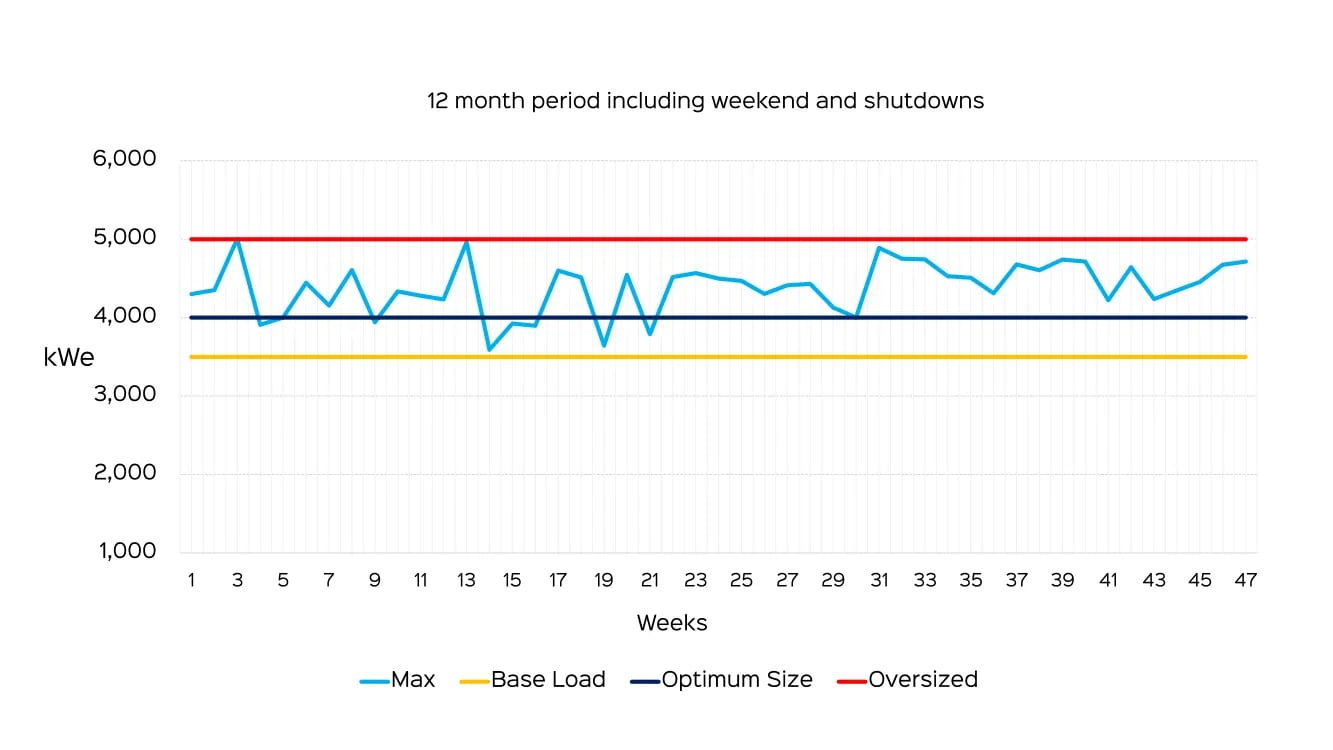
If your motivation is to maximise the CHP system efficiency, there is no need to size a plant for the highest peak electricity or heat demand, unlike conventional power generation, which does not match base heat and power loads as efficiently. If a CHP plant can cover 100% of peak annual energy demand, the unit will run at reduced capacity for most of the year.

CHP generators are less efficient when operating at a reduced load.

Running at maximum efficiency, a CHP unit will generate only enough heat and power to meet a site’s base-load demand and produce electricity at the level the site consistently needs.
Power and heat from the CHP system can be supplemented with additional electricity from the grid and heat from existing boilers to meet peak demand and optimise performance.

From a commercial (rather than a pure efficiency) perspective, the optimum engine size would provide slightly more than the base load. It would be sized to run at full load for as long as possible, maximising the economic benefits of self-generation and resulting in only minor energy waste. However, oversizing can also leave more unrecovered heat and some additional waste.CHP Sizing-1
Heat vs Power

Although wasting heat makes CHP less efficient, the financial benefits of self-generated power can make it worthwhile to run CHP at a high electrical load, even if heat demand or process heat is relatively low, because it still generates heat that may be recovered and used.

This may only be true up to a certain point, however, because inefficient CHP systems risk missing out on tax incentives, such as an exemption from the Climate Change Levy and eligibility for the Annual Investment Allowance, if they do not meet CHPQA efficiency standards.

For some sites, the amount of wasted heat or unused thermal energy can be reduced by:

  • Temporarily storing heat using a thermal store, or
  • Using an absorption chiller to turn excess heat into cooling through trigeneration

Calculating Size Accurately

Correctly sizing a CHP system means closely matching a unit to a site’s energy load. This requires careful analysis of a site’s energy demand over time.

Energy consumption data can come from several sources. To build a clear picture of energy consumption, it is preferable to use half-hourly metering data or information from a building energy management system.

Plotting electricity and heat consumption over time will produce a pattern showing how and when energy is used. It will also show variations in demand at different times of day, during the week and across the year. Mapping these variations is crucial to finding the optimal level at which a CHP unit should operate at maximum output.

If you are sizing a CHP system for a new building, demand profiles can be estimated from a range of sources, including design data, occupancy patterns, simulation modelling, and benchmark profiles from comparable projects.

Using inaccurate energy data is one of the biggest causes of under-or mis-sizing a CHP project, so take care to ensure this data accurately reflects real-world conditions.

2. Gas Supply

Natural gas is the main source of fuel used in CHP systems in the UK and Ireland. It has a high heat value, so is ideally suited to on-site power generation, but each CHP project will have a number of considerations based on a site’s available gas supply.

Gas Pressure

A reliable gas supply is critical to success. Mains gas pressure varies significantly across the UK and Ireland. In the project planning phase, specifiers must ensure that the local gas supply network can meet the pressure demands of a CHP engine.

Gas compressors can provide a pressure boost if the local supply is too weak, but this will incur additional capital and operating costs and could render on-site gas generation unsuitable.

Gas Volume

Gas-fired CHP will significantly increase a site’s natural gas demand. If the installed network cannot cope with the additional volume demand, the supply infrastructure may need to be upgraded.

If a site connection cannot meet the new peak requirement, it may need to be updated, or a separate gas supply may need to be opened up to serve the CHP plant. Any supply issues will need to be raised with the local gas distribution network.

Gas Quality

The quality of natural gas is regulated, but composition can vary from location-to-location. Small variations in quality are not usually sufficient to affect on-site gas generation, but they could have a small impact on efficiency. Over time, this small discrepancy will need to be factored into output calculations.

Specifiers can judge the quality of gas at a site by measuring its composition and using the results to calculate quality parameters, like calorific value.

3. Planning

A new energy centre, containerised gas engine or existing building CHP installation may need to be approved by the local authority. Planning permission can be easier or more difficult to obtain based on the site’s local area.

If a site is in a residential area or close to a major city, the building design may need to be altered to reduce the impact on the local community. In more industrial areas away from large population centres, planning permission is generally easier to attain.  

Noise Attenuation

The noise a CHP unit makes is a key consideration, particularly when there is a residential dwelling nearby.

The impact of noise can be reduced by situating a CHP unit as far away from residences as possible. Alternatively, noise abatement solutions can be added to an energy centre or containerised gas engine, which can make the CHP plant more expensive.

Flue Modelling

This is often a straightforward procedure that can also examine other aspects of the installation, such as the height of the exhaust gas flue systems and the wider exhaust system, as part of the flue design and compliance review. A D1 calculation regulates this aspect and determines the flue height requirement.

Gas Dispersion

Local gas dispersion may also cause an issue with a local authority. In some cases, dispersion modelling must be carried out to discover how dispersion will affect the area.

If local pollution levels are particularly high or prevailing winds are likely to have a serious impact on a local community, adjustments may be needed to the exhaust gas flue system.

4. Medium Combustion Plant Directive (MCPD) Compliance

The Medium Combustion Plant Directive (MCPD) places a limit on the amount of nitrogen oxide (NOx) released from combustion generators in the 1-50 MW range in England and Wales. This can cause issues for some plants near major cities – particularly those in or near London.

CHP installers will ensure that all installations meet the MCPD restrictions. In some cases, selective catalytic reduction technology can be used to reduce emissions, though this can increase CHP running costs.

5. Distribution Network Operator (DNO) Requirements

A Distribution Network Operator (DNO), or a Distribution System Operator (DSO), is a company responsible for distributing electricity throughout the UK and Ireland, including the wider power systems and connection infrastructure affected by network review. The DNOs own and operate the system of cables and infrastructure that transport electricity from the national transmission network to homes and businesses.

To connect your CHP plant to the electricity distribution network, you must apply to the local Distribution Network Operator (DNO) by following the G99 connection procedure.

The Data Registration Code for the Distribution Code sets out the obligations of the generator and the Distribution Network Operator (DNO) to exchange data during the design process. It lists the data items that may need to be exchanged. The purpose of completing the application process is to simplify and clarify this data exchange process.

For guidance on the connection of generation assets to the UK and Ireland electrical networks, you should visit the Energy Networks Association (ENA), which is the industry body representing energy network operators in these territories.

Gas Engine CHP Asset-Care Maintenance

Understanding the asset-care regime carried out by the CHP installer is as important as the capital installation project itself. With a typical gas engine plant expected to operate for more than 15 years, appropriate and routine asset care and maintenance are critical to ensuring the solution can maximise commercial benefits and meet sustainability requirements. It is typically installed to maximise lifecycle efficiency and maintain savings over time.

Typically, CHP engines are installed at sites where management of energy costs and plant performance is key. As such, businesses do not wish to detract from their core activities by having to operate and/or maintain their installations directly.

We advise engaging with a CHP solutions provider who can maintain the CHP asset on your behalf, ensuring regular servicing and maintenance are carried out as per the manufacturer-recommended service intervals to maintain high availability and efficiency of the gas engine CHP. Carrying out a thorough maintenance regime will unlock the full cost and carbon benefits of the CHP plant, as CHP typically delivers the best long-term operational performance when properly serviced. 

Edina can provide availability guarantees backed by comprehensive service agreements, giving you confidence in long-term plant performance and support tailored to your project. Please contact us directly or visit our gas engine service and maintenance page for more information.

Gas Engine CHP Asset-Care Agreements

Dedicated CHP installers will offer a range of tailored asset-care agreements with 12-, 15, or 16-year life cycles and guarantee a minimum engine uptime of around 91 per cent, which is considered the industry standard. In-market, location-based field service engineers will be able to perform frequent routine maintenance to keep downtime to a minimum.

CHP Plant Remote Monitoring

As such, field service engineering teams will be supported by 24/7, 365-day remote monitoring coverage, allowing them to have full visibility into CHP engine performance. This includes continual monitoring of key performance indicators, such as electrical output and gas quality. Vendors with remote monitoring capabilities will allow faults to be identified and diagnosed sooner. In some cases, problems can be fixed remotely, cutting maintenance and call-out costs.

Genuine OEM or Aftermarket Parts?

Using genuine Original Equipment Manufacturer (OEM) parts will enable the CHP plant to operate at its optimum performance. OEM parts are produced directly by the engine manufacturer to a high-quality standard and are designed to fit the engine to ensure safe and reliable operation and performance.

Many aftermarket parts use low-quality materials and may save you money in the short term, but will likely need replacing more frequently, leading to unnecessary engine downtime and higher long-term costs. Additionally, genuine OEM parts are readily available and backed by manufacturer warranty support, providing additional peace of mind.

Discover the key differences between genuine and non-genuine components in our comprehensive guide: Genuine OEM vs Aftermarket parts.

Specifying CHP Suppliers

Understanding your business’s requirements will determine the success of your CHP solution. Many companies offer a CHP unit as a standalone product, while others provide a comprehensive CHP solution that includes detailed design, engineering, life-cycle services, and project financing. In a standalone supply, a CHP plant consists essentially of a prime mover such as an engine, turbine, or fuel cell, an electrical generator, and heat recovery equipment, with the electrical generator coupled to that recovery equipment to produce electricity and useful heat on site.

Therefore, understanding your goals will determine the scope of work required. A few examples are below:

  • Support with assessing whether CHP is a fit for your business (feasibility assessment)
  • Equipment supply only
  • Equipment supply, system design and installation
  • Equipment supply, system design, installation, and life cycle services
  • Equipment supply, system design, installation, life cycle services, project financing, and related power generation systems

Once you have a clear understanding of your business requirements, the simplest way to gather information on CHP suppliers is to conduct research. Gathering information on their gas engine product range, office locations, and capabilities will help form an initial assessment and select suppliers that best fit them.

When reviewing CHP supplier capabilities, it is important to consider:

  • What is their product range and supply chain relationship?
  • What is their structure for supply, design and engineering, containerisation, project installation, commissioning, and asset care support?
  • What is their financial standing?
  • What case studies, references and testimonials are available?

Take time to contact the suppliers and, where possible, arrange a face-to-face or online meeting to discuss your energy challenges. During the meeting, the suppliers can present an appropriate energy solution and share details of their company profile and capabilities. Your team can then assess whether they are a good fit for your business.

CHP Savings Calculator

If you are considering Combined Heat and Power (CHP) for your facility, try our free CHP Savings Calculator today. It provides a quick and simple way to assess the potential financial benefits of installing a Combined Heat and Power (CHP) system at your site.

By entering a few basic details about your current energy usage, the calculator estimates how much you could save by generating electricity on-site while simultaneously recovering and utilising heat that would otherwise be wasted.

Ready for CHP?

In summary, Combined Heat and Power (CHP) is a highly efficient and flexible energy solution that simultaneously generates electricity and useful heat from a single fuel source, providing long term energy cost savings compared to conventional boilers and separate power generation.

With proven technology, a variety of installation options, and compatibility with low-carbon fuels including hydrogen and biogas, CHP supports organisations like yours in achieving sustainability goals while enhancing energy resilience and operational efficiency. Whether for large industrial facilities, hospitals, commercial buildings, or district energy schemes, CHP offers substantial financial and environmental benefits.

To explore how CHP can transform your energy strategy and deliver long-term savings, contact Edina today, and let's discuss your energy challenges. Alternatively, discover our comprehensive CHP capabilities tailored to your unique challenges.

Contact us about our CHP solutions

Discover CHP For My Business

Artboard 1

Contact Us About Our CHP Solutions

Interested in on-site CHP? Discover our approach to CHP installation, optimisation, and asset-care.


Discover CHP For My Business