
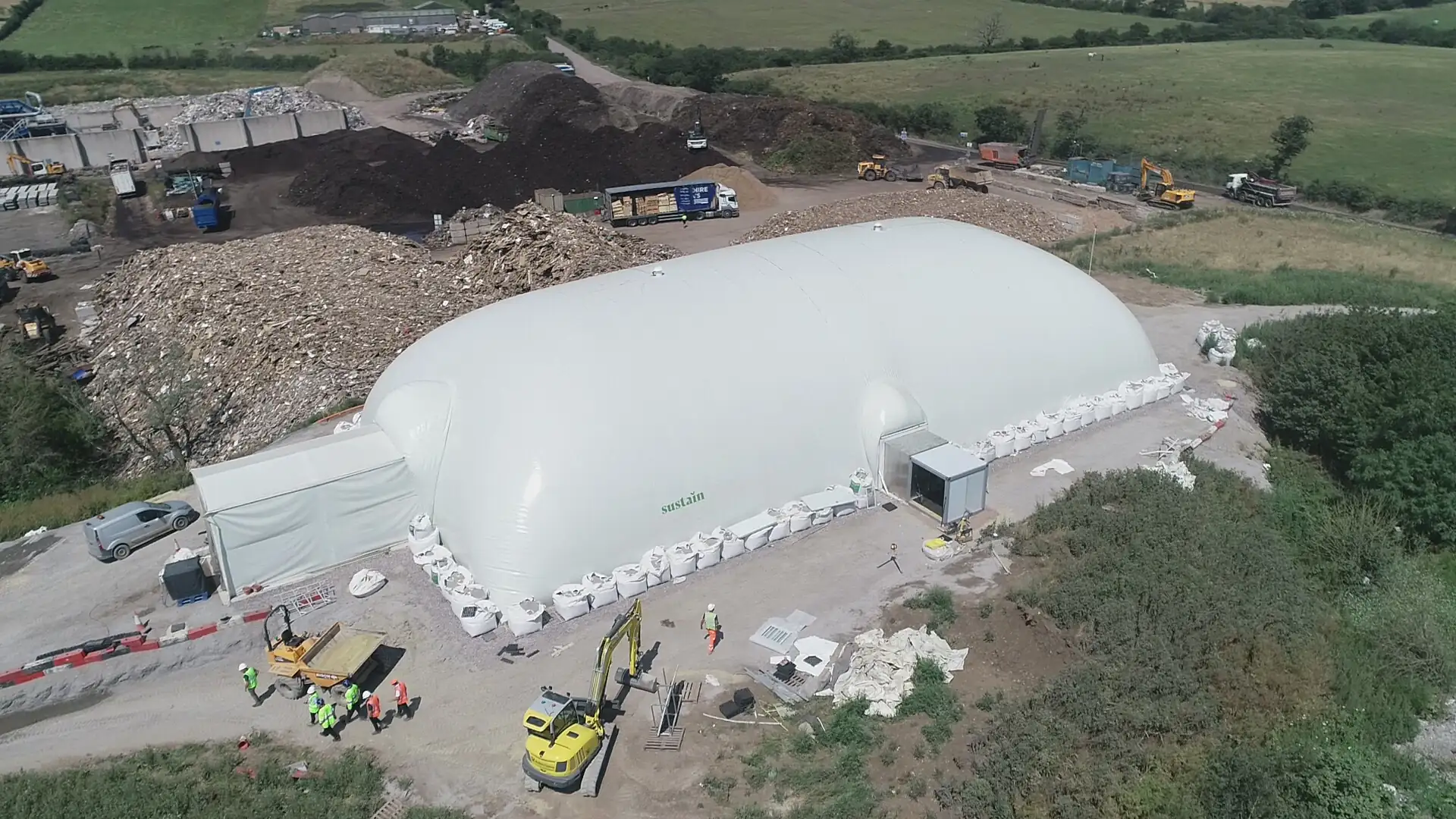
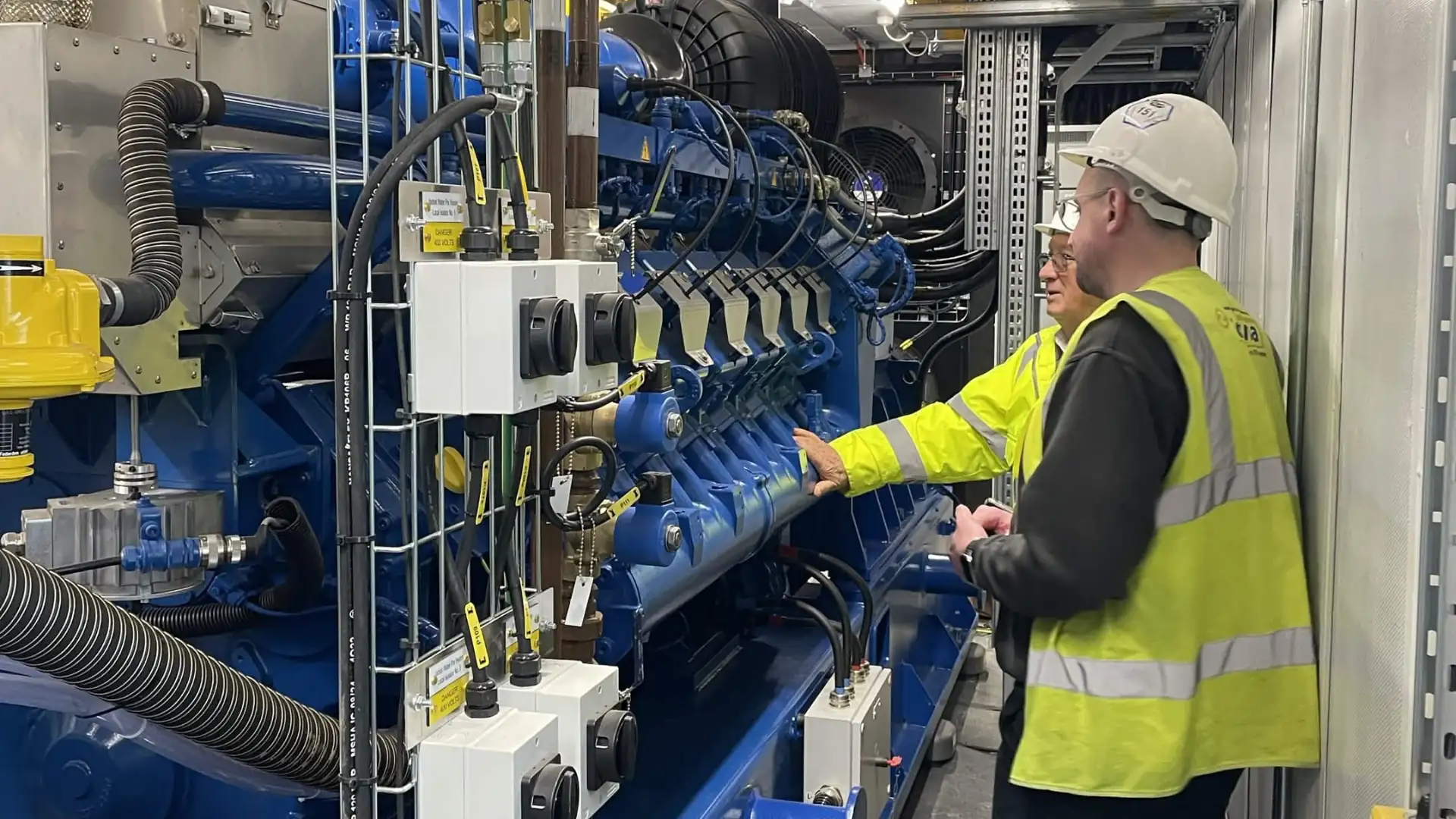
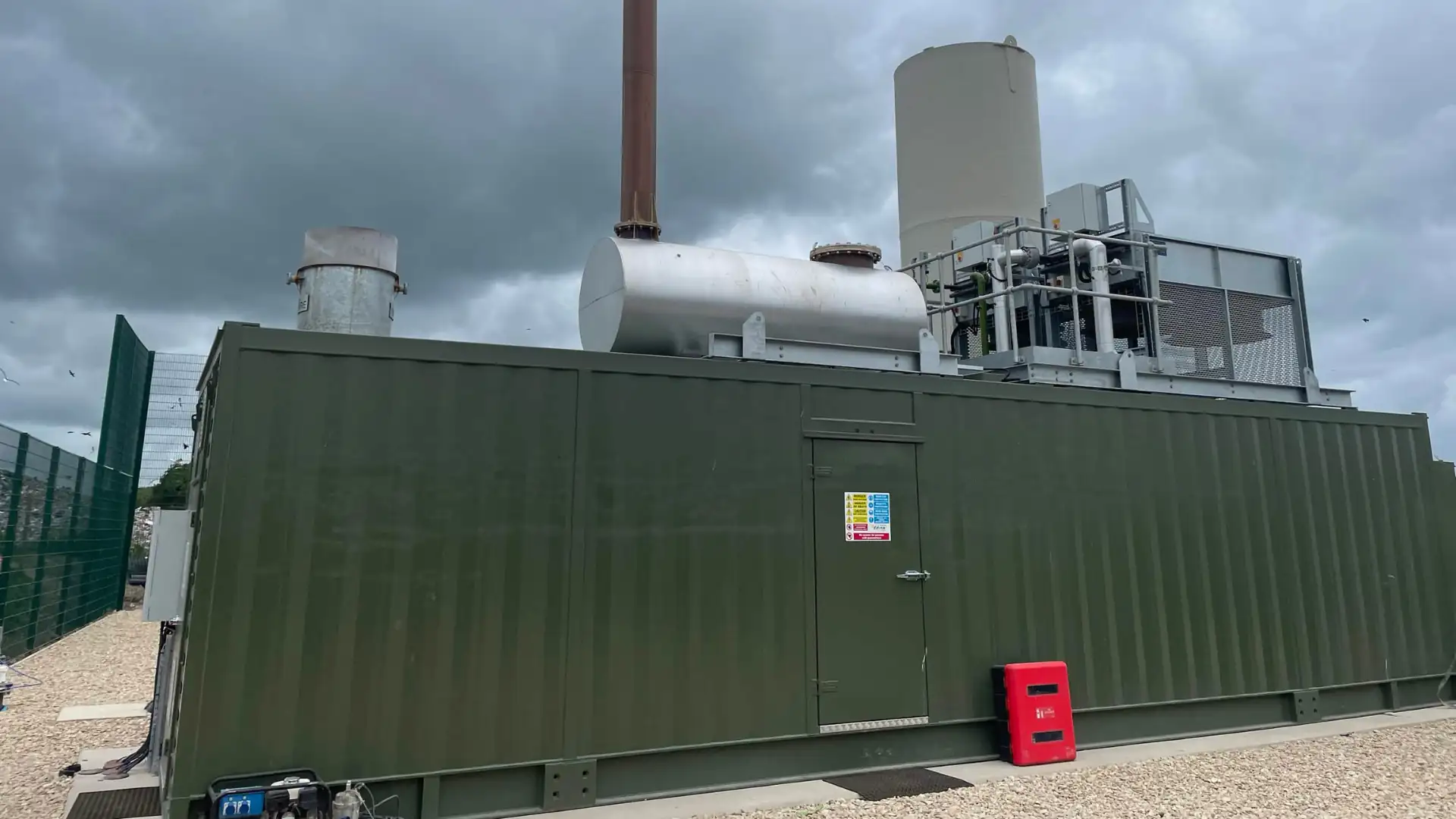
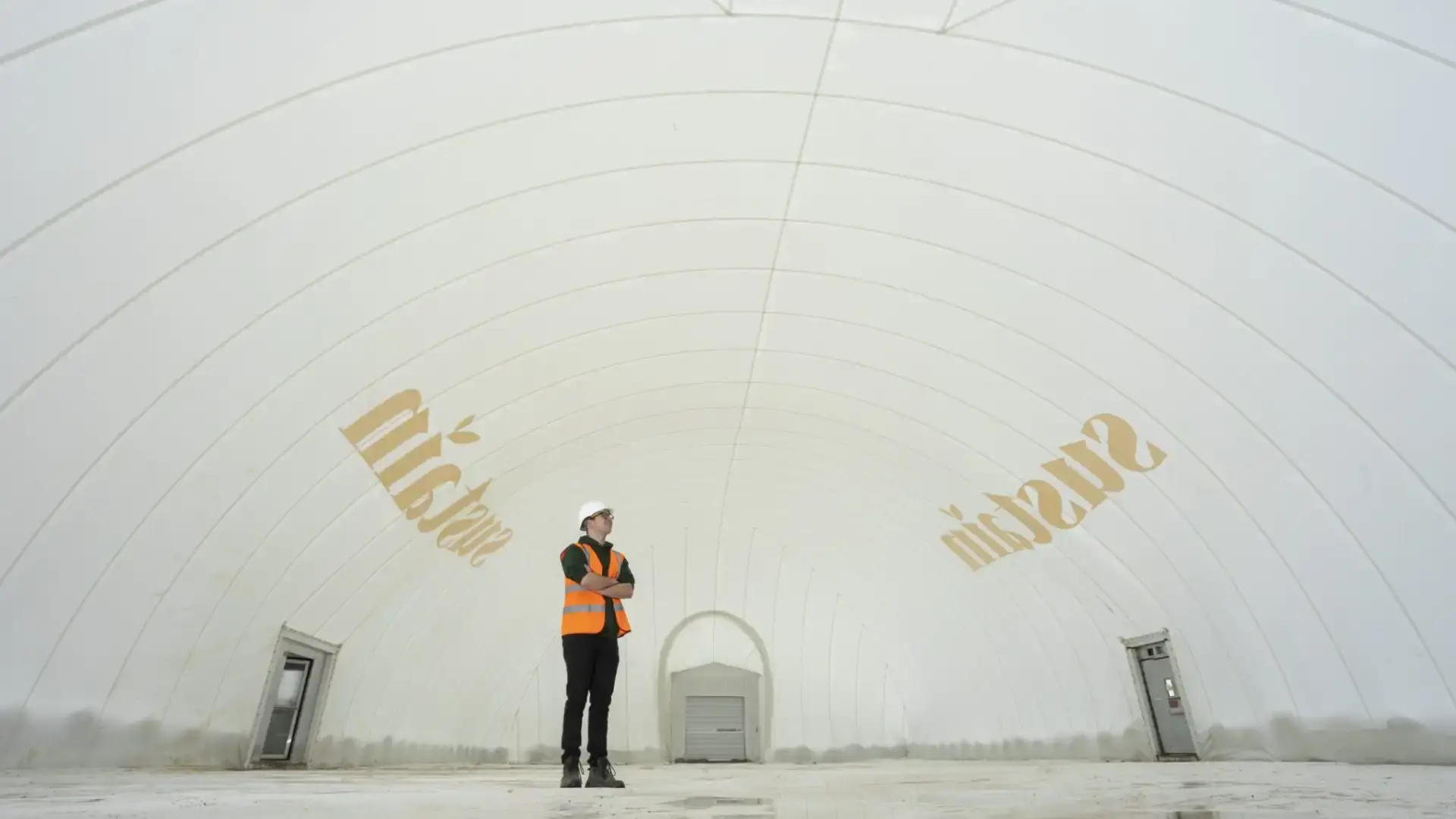
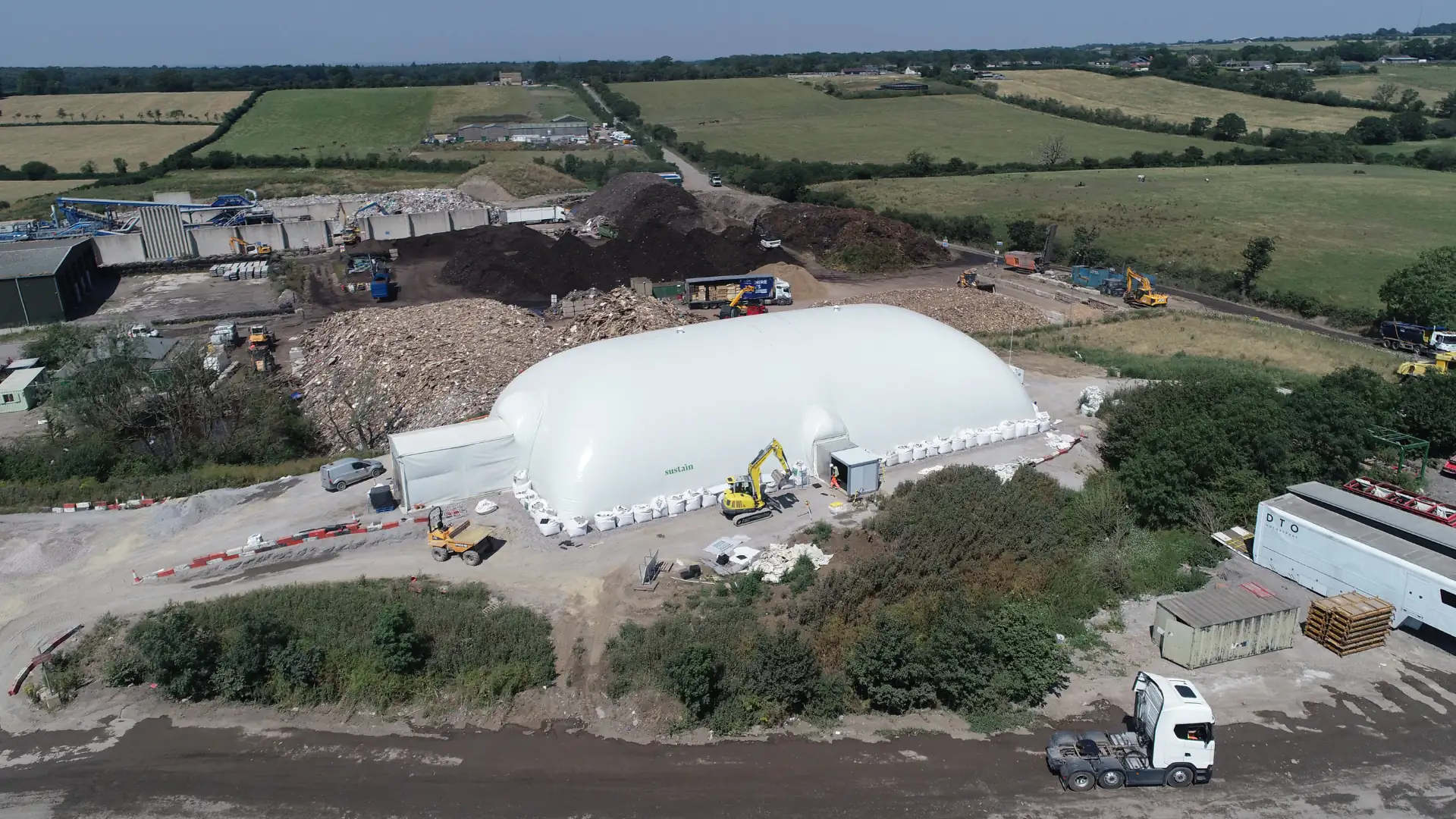
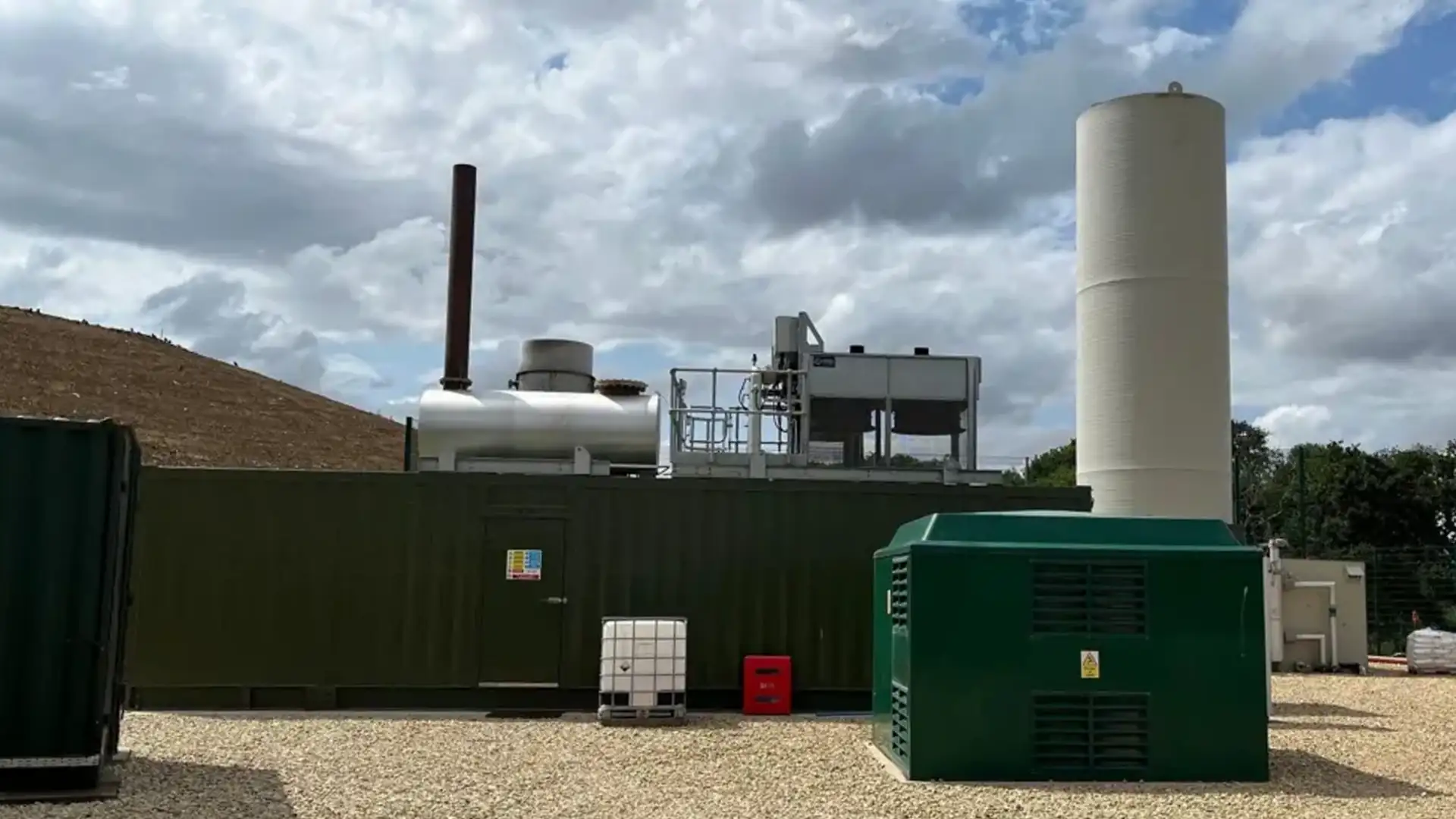
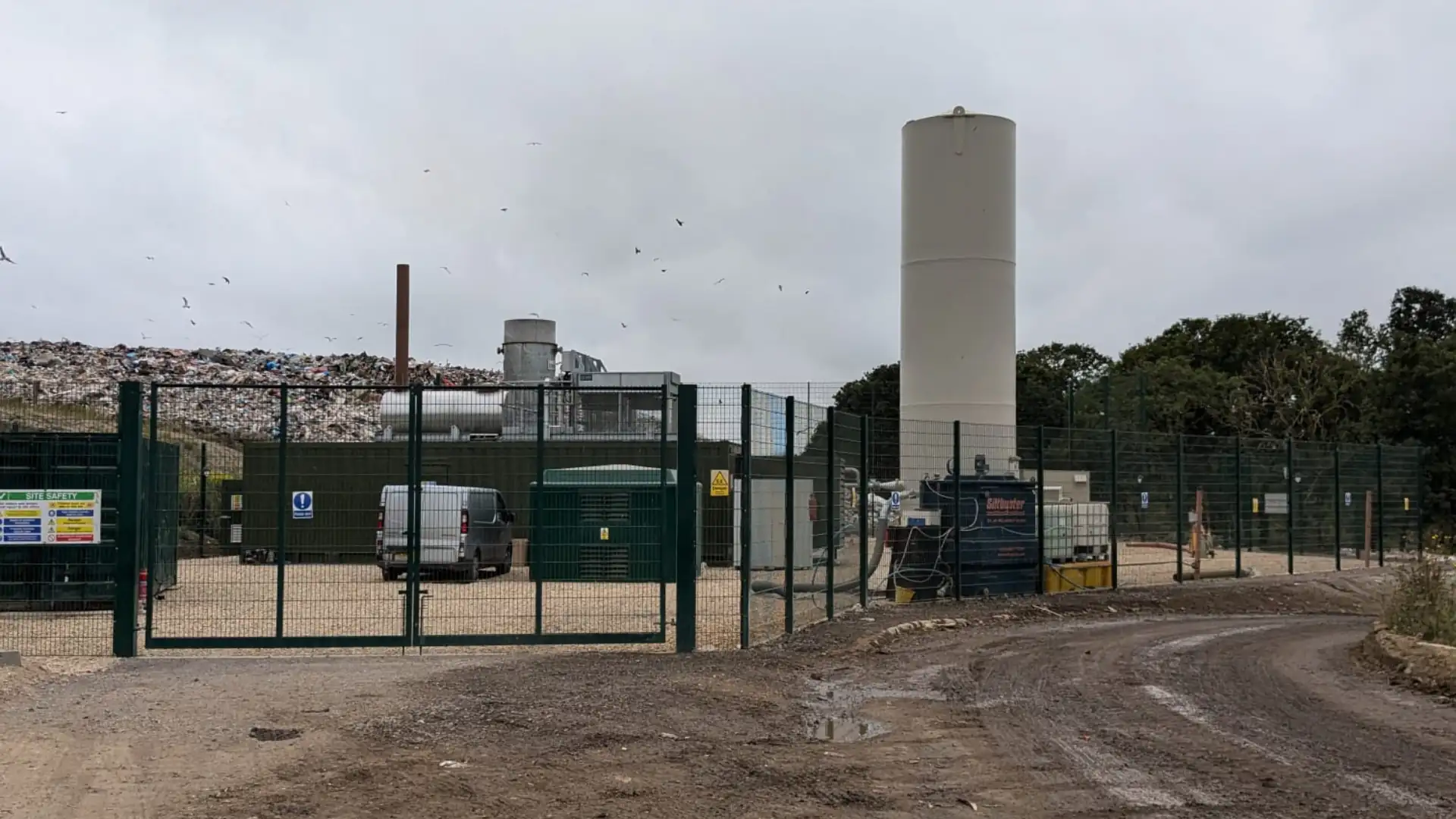
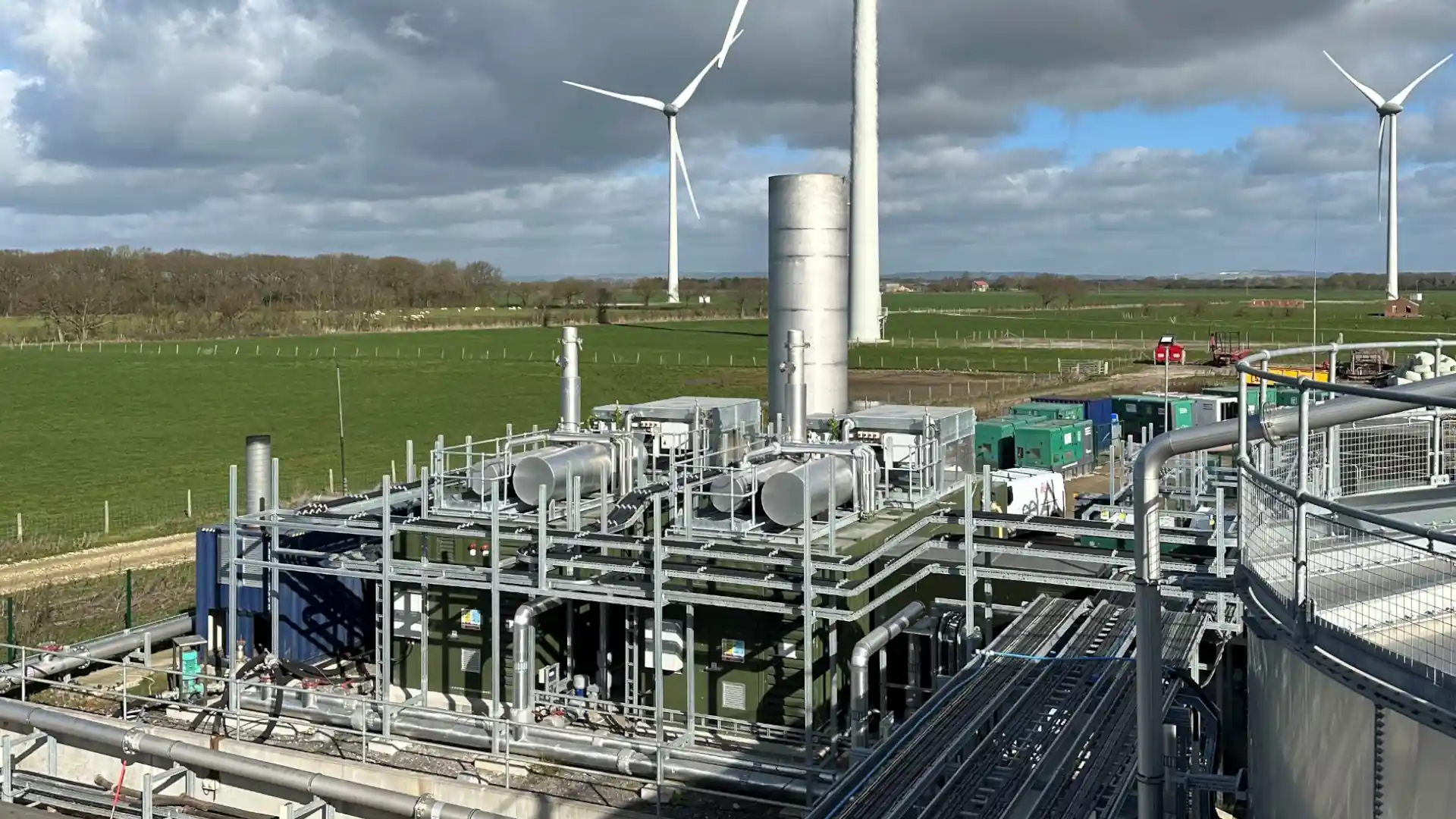
In 2021, the site still flared landfill gas while Crapper & Sons pursued ambitious plans to expand its recycling and waste-to-energy activities. Although the site benefited from a favourable electricity export agreement with the local Distribution Network Operator, its grid import capacity was limited to 600kW. Consequently, the site had to power some equipment with diesel generators, despite an already available, potentially valuable on-site energy resource.
After upgrading the landfill gas collection system, Edina received detailed gas flow and quality data to assess the technical and commercial feasibility of installing a gas-engine Combined Heat and Power (CHP) plant.
Analysis confirmed that sufficient landfill gas was available to support a 1.2MWe gas engine, but it also revealed a major engineering obstacle. Hydrogen sulphide concentrations averaged about 6,000 ppm, several times above the proposed gas engine specification limits, while elevated siloxane levels posed an additional risk to engine performance, reliability, and service life.
Edina’s initial proposal, developed as part of the supply of a generating set, evolved into a comprehensive Engineering, Procurement and Construction (EPC) solution.
The solution integrated a 1.2MWe MWM gas engine, gas conditioning, landfill gas flaring, and dedicated gas boosters into a single engineered system. Designed specifically to overcome the site's challenging gas composition, the plant has been commercially operational since late 2023.
The result was turning difficult waste gas into a productive energy resource, reducing reliance on flaring and creating new value from the landfill’s existing infrastructure.
Bringing the CHP plant into commercial operation was an important achievement, but generating electricity from landfill gas was only the beginning. The installation became the first step in Crapper & Sons' wider Sustain Wiltshire vision.
Crapper & Sons founded Sustain Wiltshire as a Community Interest Company to deliver sustainable food, energy, employment, and living to the local community. Its wider Super-Midden concept seeks to repurpose landfill sites as centres that can generate energy, heat, and food.
At the heart of the concept is the opportunity to derive greater value from landfill gas than electricity generation alone.
Methane-rich landfill gas is extracted from capped landfill cells and cleaned, including removing hydrogen sulphide, before the methane fuels a CHP gas engine.
The wider Sustain concept then seeks to put the available resources to productive use:
Together, these elements create a compelling circular pathway:
Waste → Landfill Gas → CHP → Heat + Electricity + CO₂ → Controlled Growing → Locally Produced Food
The concept shows how landfill gas, traditionally seen as an environmental liability, can become the starting point for a broader system of energy and resource recovery.
The concept has been designed to extend well beyond the initial demonstration dome. The first 40m × 20m growing dome has already been erected at the Crapper & Sons site and will be used to trial and refine the concept. Each dome is projected to produce about 10 tonnes of fruit and vegetables.
Subject to the success of the initial trials and the necessary permissions, Sustain Wiltshire's longer-term ambition is to gain approval for 100 additional 40m × 20m growing domes, developed at the site over the next 10–15 years. The initiative ultimately aims to supply up to 80% of the fruit and vegetable requirements of Royal Wootton Bassett, Purton and Brinkworth, with further expansion planned towards Malmesbury.
At full proposed scale, Crapper & Sons and Sustain Wiltshire estimate the wider initiative could produce more than 8,000 tonnes of affordable fruit and vegetables annually, create 130 jobs, and prevent the release of 3,800 tonnes of CO₂ each year. These figures reflect the expanded concept's anticipated potential.
The model also demonstrates significant potential for replication beyond Wiltshire. By combining landfill gas recovery, gas treatment, CHP, and controlled-environment agriculture, the project offers a new model for extracting greater value from landfill resources while supporting energy generation, local food production, and community resilience.
The project delivers environmental value at several levels. It converts landfill gas into useful energy, supports the productive use of CO₂, and helps move the site away from reliance on diesel generation. The wider growing concept could also reduce food miles, storage, and dependence on conventional distribution networks by producing food closer to the communities that consume it.
Its social ambitions are equally significant. Sustain Wiltshire aims to provide affordable, locally grown produce, improve local food resilience and create employment as the concept expands.
The Crapper & Sons and Edina project demonstrates excellence across engineering, planning, environmental responsibility and circular-economy innovation.
Edina overcame exceptionally challenging landfill gas conditions to deliver a complete 1.2MWe EPC gas-to-power solution within an onerous operational environment. More significantly, the installation has provided an energy platform for a scalable concept that reimagines what a landfill site can become.
Rather than representing the end of the waste journey, the site is becoming the starting point for a new cycle of resource recovery, energy generation and local food production.
From landfill to lettuce, this project demonstrates how engineering ingenuity can turn waste into useful energy, support the ambition for local food production and create lasting community value. The project has been shortlisted in the Project of the Year category at the AMPS Awards 2026, recognising its innovative approach to turning an environmental challenge into an opportunity for a more sustainable future.
Client:
Crappers & Sons Landfill
Location:
Swindon, UK
Capacity:
1.2MWe
Operational:
2024
Manufacturer:
MWM
Packager:
Edina
Engine Type:
1 x TCG 2020 V12
Alternator Type:
N/A
Primary Fuel:
Landfill Gas
R100 Energy transitions to low carbon sustainable solution to tackle energy trilemma
Read moreMicrogrid / Hybrid co-location solution delivers energy security and sustainability for UK commercial food waste management company BioteCH4
Read moreEdina delivers Combined Heat and Power (CHP) solution for Dynex Semiconductors as part of its sustainability pathway
Read more


Copyright © Edina. All Rights Reserved.